
AI Application Development Services for Enterprise Growth
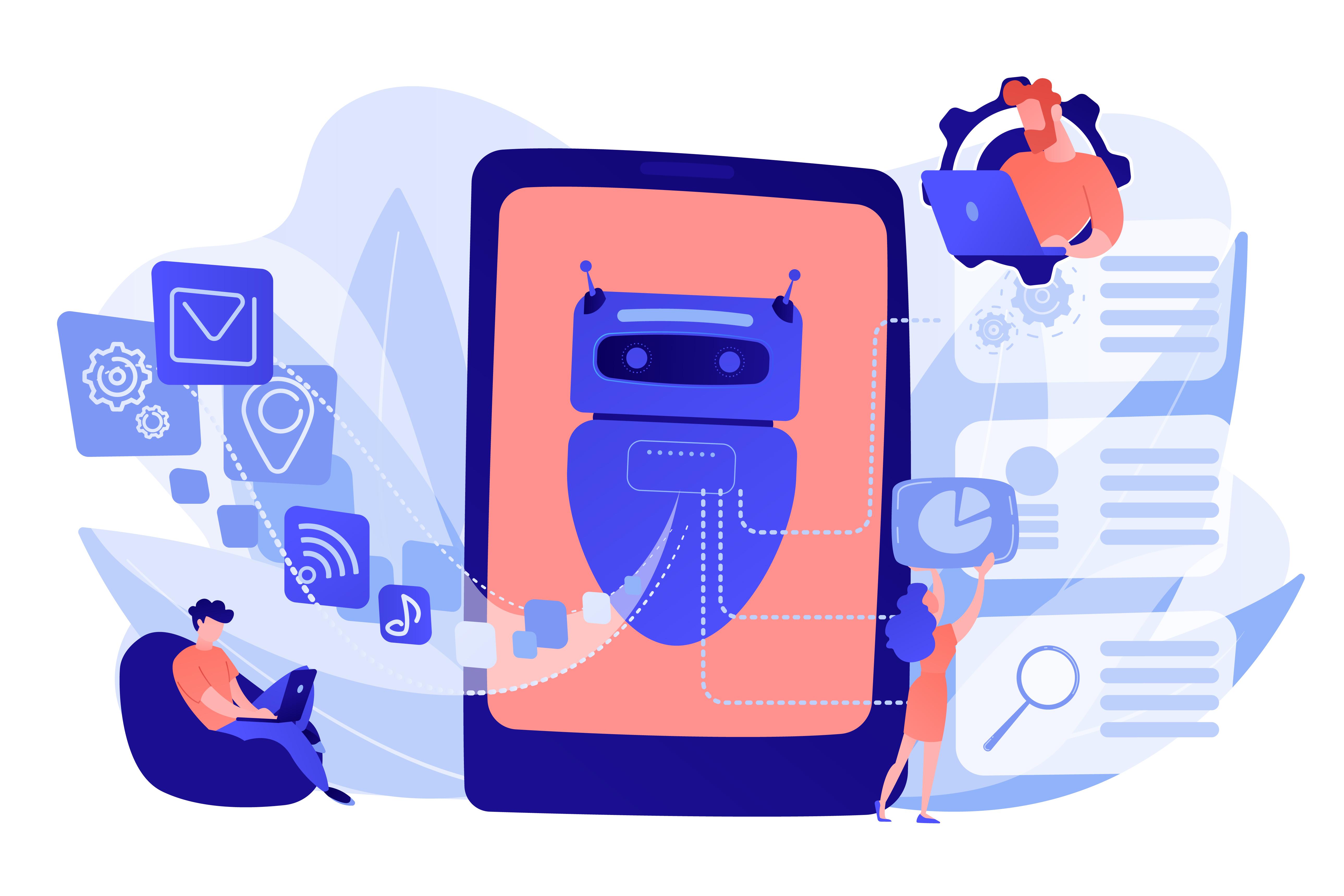
In today's hyper-competitive digital economy, enterprises are increasingly turning to intelligent software solutions to stay ahead. The demand for AI application development services has surged dramatically as organizations recognize the transformative power of artificial intelligence in optimizing operations, improving decision-making, and creating superior customer experiences. From automating routine tasks to uncovering deep business insights, AI-powered applications are no longer a luxury — they are a strategic necessity for enterprises aiming for sustained growth.
Understanding the Enterprise AI Landscape
The global enterprise AI market is expanding at a remarkable pace. Companies across sectors — from healthcare and finance to logistics and retail — are investing heavily in AI capabilities. The reason is straightforward: enterprises that harness AI-driven applications can process massive datasets, detect patterns invisible to the human eye, and deliver personalized experiences at scale.
Yet, building AI-powered enterprise applications is far more complex than standard software development. It demands expertise in machine learning, data engineering, cloud infrastructure, model training, and seamless integration with legacy systems. This is precisely why businesses partner with specialized providers of AI application development services to bridge the gap between ambition and execution.
Core Components of Enterprise AI Applications
Enterprise-grade AI solutions typically comprise several interlinked components:
Data Pipelines and Engineering: AI applications are only as powerful as the data that feeds them. Robust data pipelines collect, clean, and transform raw data into formats suitable for model training and inference. Enterprises often deal with siloed data across departments, making data engineering a critical first step.
Machine Learning Model Development: Whether predictive analytics, recommendation engines, or anomaly detection systems, ML models are the intelligence core of any AI application. Developing these models requires iterative experimentation, hyperparameter tuning, and rigorous validation.
Natural Language Processing (NLP): Many enterprise AI applications involve processing human language — customer support chatbots, contract analysis tools, sentiment analysis platforms, and internal knowledge management systems all rely on NLP capabilities.
Computer Vision: Industries like manufacturing, healthcare, and retail use image and video analysis for quality control, diagnostics, and inventory management. Computer vision modules embedded within enterprise apps deliver real-time visual intelligence.
Integration and Deployment: Building the model is only half the battle. Deploying it within an enterprise ecosystem — integrating with ERP, CRM, and data warehousing systems — while ensuring security, scalability, and uptime is equally critical.
How AI Application Development Services Drive Enterprise Growth
Partnering with a proficient AI development team unlocks multiple growth levers for enterprises:
Operational Efficiency: AI automates repetitive, time-consuming workflows — invoice processing, report generation, inventory forecasting — freeing human talent for higher-value work. Enterprises consistently report 20–40% productivity improvements after AI adoption.
Enhanced Decision-Making: Real-time dashboards powered by AI provide executives with predictive insights, scenario modeling, and market trend analysis. Decisions become faster, more accurate, and grounded in data rather than intuition.
Personalized Customer Experiences: AI-driven recommendation engines, dynamic pricing models, and intelligent chatbots tailor every customer interaction. Higher personalization translates directly into increased conversion rates, customer satisfaction, and lifetime value.
Revenue Generation: Many enterprises deploy AI to identify upsell and cross-sell opportunities, optimize marketing spend, and predict churn before it happens. These capabilities directly contribute to top-line revenue growth.
Risk Mitigation: In sectors like banking and insurance, AI models detect fraudulent transactions, assess credit risk, and flag compliance anomalies — protecting enterprises from costly errors and regulatory penalties.
Industries Benefiting Most from Enterprise AI Applications
While AI's reach is broad, certain industries are experiencing particularly transformative impacts:
Financial Services: Banks and fintech companies are deploying AI for credit scoring, fraud detection, robo-advisory, and algorithmic trading. AI applications process millions of transactions per second with accuracy that far exceeds human capacity.
Healthcare: From AI-powered diagnostic imaging to drug discovery platforms and patient engagement tools, healthcare organizations are using intelligent applications to improve outcomes and reduce costs.
Retail and E-Commerce: Personalized product recommendations, dynamic inventory management, visual search, and AI-driven supply chain optimization are helping retailers compete in an increasingly challenging market.
Manufacturing: Predictive maintenance applications use sensor data to identify equipment failures before they occur, reducing unplanned downtime and saving millions in operational costs.
Logistics: Route optimization, demand forecasting, and automated warehouse management systems are redefining how goods move from origin to destination.
Choosing the Right AI Development Partner
Selecting a development partner for enterprise AI is a decision that carries enormous long-term implications. Enterprises should evaluate potential partners based on the following criteria:
Technical Depth: Look for teams with demonstrable expertise across the AI stack — data science, ML engineering, MLOps, cloud platforms, and security. Case studies and client testimonials are invaluable here.
Domain Expertise: AI models perform best when built by teams that understand industry-specific nuances. A partner experienced in healthcare AI thinks differently from one focused on retail.
End-to-End Capability: The best providers of AI application development services offer full lifecycle support — from initial discovery and data strategy through model development, deployment, and ongoing optimization.
Scalability and Future-Proofing: Enterprise AI solutions must be built on architectures that scale with the organization and accommodate future advancements in AI technology.
Compliance and Security: Particularly for regulated industries, the development partner must demonstrate rigorous data privacy practices, model explainability, and compliance with frameworks like GDPR, HIPAA, and SOC 2.
Emerging Trends Shaping Enterprise AI Applications
The AI landscape evolves rapidly, and enterprises must stay attuned to emerging technologies that will define the next generation of applications:
Generative AI Integration: Large language models (LLMs) are increasingly embedded into enterprise workflows — summarizing documents, generating code, drafting communications, and supporting knowledge management.
AI at the Edge: Moving AI inference to edge devices reduces latency and bandwidth costs, making real-time intelligence possible in environments where cloud connectivity is limited.
Explainable AI (XAI): As regulators and executives demand greater transparency in AI decision-making, explainability frameworks are becoming standard components of enterprise AI applications.
Multimodal AI: The ability to process and reason across text, images, audio, and structured data simultaneously is opening new categories of enterprise applications.
AutoML and AI Democratization: Low-code and no-code AI platforms are allowing business analysts and domain experts to build and deploy models without deep ML expertise, accelerating enterprise AI adoption.
Building a Scalable AI Strategy
Successful enterprise AI adoption is rarely achieved through isolated projects. It requires a coherent strategy that aligns AI initiatives with business objectives, builds internal data infrastructure, establishes governance frameworks, and fosters an AI-ready culture.
Enterprises that approach AI strategically — starting with high-impact, well-defined use cases and scaling progressively — achieve far better results than those pursuing large, unfocused transformations. Engaging an experienced provider of AI application development services early in this journey ensures that technical decisions are made with long-term scalability and business alignment in mind.
Conclusion
The competitive advantage conferred by AI is real, measurable, and growing. Enterprises that invest in sophisticated AI application development services today are building capabilities that will compound in value over the coming decade. Whether the goal is operational efficiency, revenue growth, customer loyalty, or risk management, the right AI applications — built on a solid data foundation with the right development partner — can be the most powerful lever an enterprise pulls for sustained growth. The journey begins with a clear vision and the right team to bring it to life.

 English
 Arabic
 French
 Spanish
 Deutsch
 Turkish
 Dutch
Dutch
 Italiano
 Russian
 Romaian
 Portuguese (Brazil)
 Greek
Greek
 Chinese
