
Birdbath Optical Module: Solving Ghosting & Light Leakage
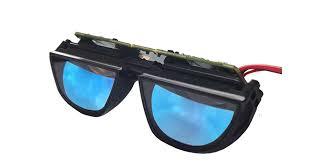
In the B2B AR/VR market, the Birdbath optical module is prized for its high resolution and wide Field of View (FOV). By bouncing light between a beam splitter and a curved combiner, it achieves a compact optical path.
However, for OEMs and tactical display developers, the "Birdbath" architecture introduces a specific set of physics-based problems. If these aren't addressed during the initial design phase, the final product will suffer from poor outdoor readability and visual artifacts that compromise the user experience.
1. The 25% Efficiency Ceiling
The most significant problem with the Birdbath architecture is its inherent optical inefficiency.
-
The Issue: Because light must pass through a 50/50 beam splitter twice, a theoretical maximum of only 25% of the light from the micro-display (Micro OLED or LCoS) reaches the user’s eye.
-
The B2B Problem: To achieve daylight-viewable brightness (e.g., 1000+ nits to the eye), the internal display must be driven at extreme intensities.
-
The Solution: This is not a "brightness" problem; it is a thermal management problem. B2B integration requires high-conductivity ceramic backplanes and specialized heat dissipation paths to prevent the Micro OLED from degrading due to the high drive current needed to overcome the 75% light loss.
2. The "Ghosting" and Internal Reflection Trap
The very structure that makes Birdbath modules compact—the semi-reflective combiner—is also its greatest liability regarding image clarity.
-
The Problem: Stray light from the real-world environment can reflect off the internal surfaces of the beam splitter, creating "ghost images" or a hazy "veiling glare" that washes out the display's contrast.
-
The Consequence: In industrial or medical applications, this loss of contrast can lead to data misinterpretation or eye strain during long-shift usage.
-
The Fix: Solving this requires multi-layer AR (Anti-Reflective) coatings specifically tuned for the angle of incidence within the Birdbath geometry. Additionally, the use of circular polarizers is non-negotiable for B2B-grade modules to "cancel" the second-surface reflections that cause ghosting.
3. Eye-Box Limitations and IPD Rigidity
While Birdbath modules offer a great FOV, they often suffer from a narrow Eye-Box (the area where the eye can see the full image).
-
The Pain Point: If the Inter-Pupillary Distance (IPD) of the user doesn't perfectly align with the module's optical axis, the edges of the display will blur or disappear (vignetting).
-
The Strategic Shift: For B2B fleets—where one size must fit many users—fixed-IPD Birdbath designs are a liability. Manufacturers must solve this by implementing active mechanical IPD adjustment or by using oversized combiners that trade a bit of weight for a more forgiving eye-box, reducing the need for custom-fitted hardware.
The Environmental Light Leakage Problem
In Birdbath designs, light from the micro-display doesn't just go to the eye; it also "leaks" outward through the semi-transparent combiner. In a B2B tactical or privacy-sensitive environment, this "forward light leakage" makes it obvious to observers what the user is seeing. Solving this requires the integration of photochromic layers or external shutters that manage light transmission without doubling the module's weight.
Conclusion
The path to a successful AR product using a Birdbath optical module is defined by how well an engineering team manages the trade-off between brightness and heat. In a B2B context, the "best" module is not the one with the highest raw specs, but the one that has been optically hardened against ghosting and thermally optimized for high-duty cycles. Success in Birdbath integration is found in the coatings and the cooling, not just the glass.

 English
 Arabic
 French
 Spanish
 Portuguese
 Deutsch
 Turkish
 Dutch
Dutch
 Italiano
 Romaian
 Portuguese (Brazil)
 Greek
Greek
 Chinese
