
How AI-Powered Healthtech Software Is Revolutionizing Diagnostics
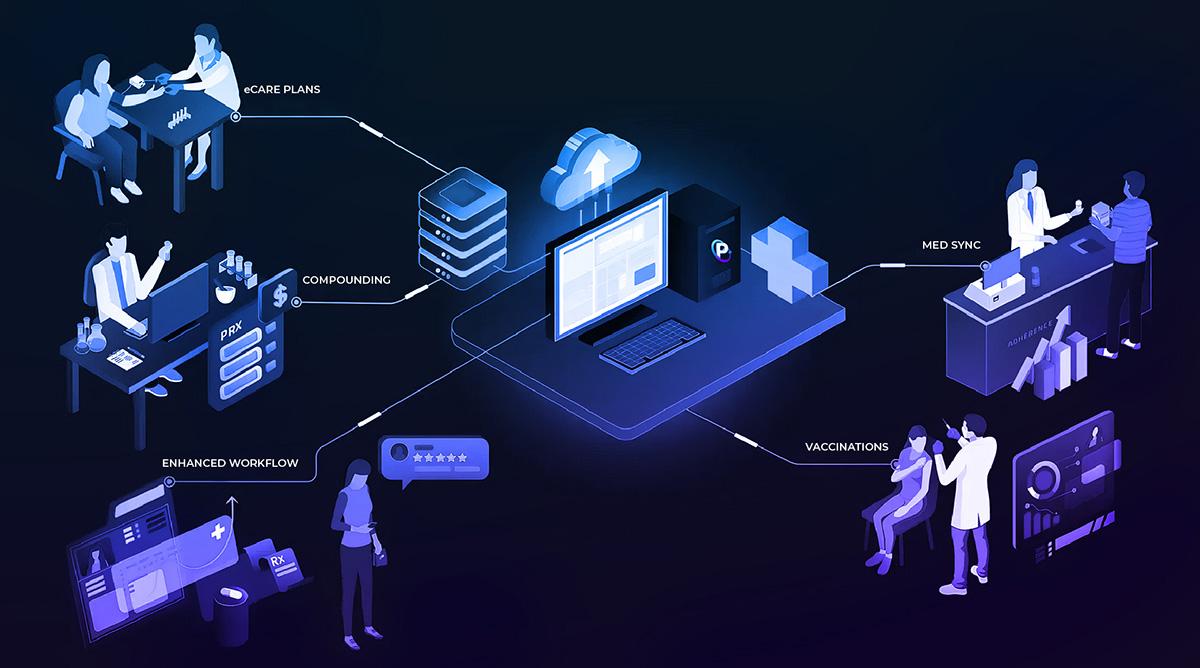
The healthcare industry is undergoing a profound transformation, and one of the most significant drivers of this change is artificial intelligence (AI). AI-powered healthtech software is reshaping diagnostic processes by enabling faster, more accurate, and data-driven decision-making. Traditionally, diagnostics relied heavily on human expertise, manual interpretation, and time-consuming procedures. Today, AI is enhancing these capabilities and introducing a new era of precision medicine.
Diagnostics play a critical role in patient care, as early and accurate detection of diseases can significantly improve outcomes. AI-powered systems are not only reducing diagnostic errors but also helping healthcare providers identify conditions at earlier stages. This advancement is improving both the efficiency of healthcare systems and the quality of patient care.
The Evolution of Diagnostics in Healthcare
Diagnostics have evolved from basic clinical examinations to sophisticated imaging and laboratory tests. While these advancements have improved accuracy, they also introduced complexities such as increased data volume and the need for specialized interpretation. Healthcare professionals often face challenges in managing and analyzing vast amounts of diagnostic information.
AI-powered healthtech software addresses these challenges by automating data analysis and supporting clinical decision-making. By leveraging machine learning algorithms, these systems can identify patterns that may not be easily detectable by the human eye, making diagnostics more efficient and reliable.
How AI Enhances Diagnostic Accuracy
One of the most remarkable benefits of AI in healthcare is its ability to improve diagnostic accuracy. AI algorithms are trained on large datasets, enabling them to recognize patterns and anomalies with high precision. This is particularly useful in detecting diseases such as cancer, cardiovascular conditions, and neurological disorders.
AI systems can analyze medical images, lab results, and patient histories simultaneously, providing a comprehensive assessment. This reduces the chances of misdiagnosis and ensures that patients receive the correct treatment at the right time. As a result, healthcare providers can deliver more confident and accurate diagnoses.
Faster Diagnosis and Reduced Turnaround Time
Speed is a critical factor in diagnostics, especially in emergency situations. AI-powered healthtech software significantly reduces the time required to analyze diagnostic data. Tasks that once took hours or even days can now be completed within minutes.
For example, AI can quickly process imaging scans and highlight areas of concern for radiologists. Similarly, laboratory data can be analyzed in real time, allowing physicians to make prompt decisions. Faster diagnosis not only improves patient outcomes but also enhances the overall efficiency of healthcare facilities.
AI in Medical Imaging and Radiology
Medical imaging is one of the areas where AI has made the most significant impact. AI-powered tools can analyze X-rays, MRIs, and CT scans with exceptional accuracy. These systems assist radiologists by identifying abnormalities such as tumors, fractures, and infections.
AI does not replace radiologists but acts as a supportive tool that enhances their capabilities. By reducing the workload and minimizing human error, AI enables radiologists to focus on complex cases and provide better patient care. This collaboration between technology and human expertise is transforming diagnostic imaging.
Predictive Analytics for Early Disease Detection
AI-powered healthtech software goes beyond diagnosing existing conditions—it also helps predict potential health risks. Predictive analytics uses historical data, genetic information, and lifestyle factors to identify individuals at risk of developing certain diseases.
Early detection allows healthcare providers to take preventive measures and initiate timely interventions. This proactive approach not only improves patient outcomes but also reduces the burden on healthcare systems. Predictive diagnostics is a key component of modern, data-driven healthcare.
Integration with Electronic Health Records (EHR)
AI-powered diagnostic systems are often integrated with electronic health records (EHR), creating a unified platform for patient data management. This integration ensures that all relevant information is readily available to healthcare providers.
By analyzing EHR data, AI systems can provide personalized insights and recommendations. For instance, they can suggest diagnostic tests based on a patient’s medical history or flag potential health risks. This seamless integration enhances workflow efficiency and supports better clinical decisions.
Reducing Human Error in Diagnostics
Human error is an inevitable challenge in healthcare, particularly in complex diagnostic processes. AI-powered healthtech software minimizes these risks by providing automated analysis and standardized procedures.
Clinical decision support systems can alert healthcare providers to potential errors, such as incorrect test interpretations or overlooked symptoms. This added layer of safety ensures more reliable diagnoses and improves patient trust in healthcare services.
Enhancing Accessibility to Diagnostic Services
AI is also playing a crucial role in making diagnostic services more accessible, especially in remote and underserved areas. Telemedicine platforms powered by AI enable patients to receive diagnostic evaluations without the need for physical visits.
AI-driven tools can assist general practitioners in diagnosing conditions that would typically require specialist input. This democratization of healthcare ensures that more patients have access to timely and accurate diagnostic services, regardless of their location.
Challenges and Ethical Considerations
Despite its many benefits, the adoption of AI in diagnostics comes with challenges. Data privacy and security are major concerns, as AI systems rely on large volumes of sensitive patient information. Ensuring compliance with data protection regulations is essential.
Additionally, there are ethical considerations related to the use of AI in decision-making. While AI can provide valuable insights, it should not replace human judgment entirely. Maintaining a balance between technology and clinical expertise is crucial for delivering safe and effective healthcare.
The Future of AI in Diagnostics
The future of diagnostics is closely tied to the continued advancement of AI technologies. Innovations such as deep learning, natural language processing, and real-time data analysis will further enhance diagnostic capabilities.
As AI systems become more sophisticated, they will play an even greater role in personalized medicine, enabling treatments tailored to individual patients. This will lead to improved outcomes, reduced costs, and a more efficient healthcare system overall.
Conclusion
AI-powered healthtech software is revolutionizing diagnostics by making processes faster, more accurate, and more accessible. From medical imaging to predictive analytics, AI is transforming how diseases are detected and managed. By reducing errors and enhancing decision-making, these technologies are improving patient outcomes and streamlining healthcare operations.
As healthcare providers continue to adopt advanced solutions, platforms like Instacare.com.pk are contributing to this digital transformation by offering innovative tools that support modern diagnostic practices. For organizations aiming to stay ahead in this rapidly evolving landscape, investing in Clinic Management Software Pakistan is a strategic move toward achieving smarter, AI-driven healthcare systems.


 English
 Arabic
 Spanish
 Portuguese
 Deutsch
 Turkish
 Dutch
Dutch
 Italiano
 Russian
 Romaian
 Portuguese (Brazil)
 Greek
Greek
 Chinese
